
Summary of Primary Outcomes for Four iTech Studies
With the rise of access to mobile technologies, ATN researchers were interested in developing tailored mobile health (mHealth) tools to support how adolescents and young adults navigate HIV prevention & care.
Whether it’s an app or your phone or a browser-based program, mHealth interventions represented (and continue to represent) exciting possibilities for increasing the uptake of HIV (and STI) services by providing flexible access to information, tools, and services. However, ATN researchers were specifically interested in figuring out what exactly mHealth interventions for young people would look like, especially considering their unique development needs. We were curious about things like:
- Which tools and features captured the attention of young people?
- What type of content and imagery did young people want to see in an app?
- How effective are mHealth interventions compared to the standard of care?
In 2016, the ATN formed iTech, or the Center for Innovative Technologies, to answer some of these questions.
In collaboration within the ATN and with researchers in other institutions, iTech aimed to impact the HIV epidemic by conducting interdisciplinary research on mHealth interventions across the HIV prevention and care continuum among adolescents and young adults. More specifically, iTech set out to develop and evaluate the effectiveness of a dozen different types of mHealth interventions.
To learn more about what we learned, download and read the following reports for four iTech projects.
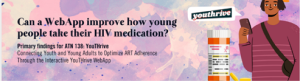
1. ATN 138: YouTHrive
YouTHrive was a two-arm randomized controlled trial (RCT) to test the efficacy of an adapted version of the Thrive with Me intervention for youth living with HIV (YLWH).
2. ATN 142: P3
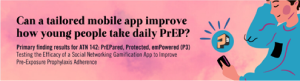
P3 was a three arm, RCT to test the efficacy of P3, a novel, theory-based mobile app that utilizes game mechanics and social networking features to improve PrEP adherence, retention in PrEP clinical care and PrEP persistence among sexual and gender minority youth.
3. ATN 157: WePrevent
We Prevent was a relationship skills intervention to improve HIV prevention uptake among young sexual minority men and their primary partners.

4. ATN 160: TechStep
TechStep was a two-condition, technology-based RCT, with a stepped care approach, among trans and gender diverse youth for reducing sexual behaviors associated with HIV transmission (e.g., condomless anal intercourse, engagement in sex work, sex while feeling the effects of alcohol or drugs) and increasing PrEP uptake.